




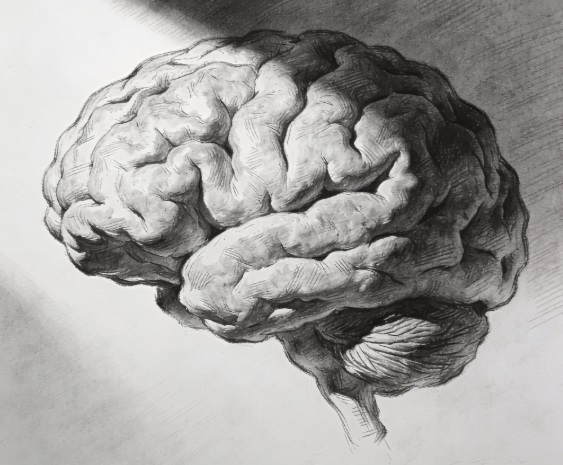
The Mind Architects: 10 Neurologists Redefining Brain Health in 2025
The human brain remains the most complex frontier in modern science. In 2025, a new generation of breakthroughs is moving beyond traditional “diagnose and monitor” approaches toward active restoration, genetic precision, and radical empathy. From uncovering how brain tumors “talk” to neurons, to utilizing art and exercise as clinical interventions, the global neurological community is proving that the future of brain health is as much about human connection as it is about high-tech data. The following ten stories highlight the pioneers—from the Netherlands to India, and the U.S. to Zimbabwe—who are currently reshaping how we understand the self.
Global Pioneers in Neurology
Bastiaan Bloem
Dr. Bastiaan (Bas) Bloem, a pioneering neurologist from the Netherlands, has been awarded the prestigious 2025 Robert A. Pritzker Prize by The Michael J. Fox Foundation. A professor at Radboud University Medical Center, Bloem is celebrated for shifting Parkinson’s research toward a holistic, person-centered model that integrates lifestyle, exercise, and community care. His groundbreaking work includes founding ParkinsonNet, a revolutionary multidisciplinary care network, and leading the “Park-in-Shape” trial, which proved that aerobic exercise can enhance neuroplasticity. Dr. Bloem intends to use the $200,000 grant to investigate the healing powers of art, continuing his mission to treat the person, not just the disease.
Frank Winkler
Dr. Frank Winkler, based in Germany, has been awarded the prestigious Brain Prize 2025 for his revolutionary research in “Cancer Neuroscience.” Practicing at Heidelberg University Hospital and the DKFZ, Winkler discovered that glioblastoma cells form mycelium-like networks that “hijack” healthy nerve cells for communication. This neural interaction fuels tumor growth and treatment resistance. Winkler shares the 1.3 million euro award with Michelle Monje from the USA. His work has already led to clinical trials using epilepsy medication to disrupt these tumor networks, offering a transformative paradigm shift in treating aggressive, incurable brain cancers.
Jeff Kuerbitz
Dr. Jeff Kuerbitz, a child neurology fellow from the United States, has been awarded a prestigious CNCDP-K12 grant through the Child Neurologist Career Development Program. Based at Texas Children’s Hospital’s Neurological Research Institute, Dr. Kuerbitz works within the lab of Dr. Hsiao-Tuan Chao. His funded research, titled “EBF3-mediated transcriptional regulation of cerebellar circuitry,” investigates the genetic mechanisms behind neurodevelopmental disabilities. This highly competitive national award supports elite physician-scientists in their transition to independent research careers. By exploring how specific proteins regulate brain circuitry, Dr. Kuerbitz aims to uncover new pathways for treating complex pediatric neurological disorders.
Jitendra Kumar Sahu
Dr. Jitendra Kumar Sahu, a professor of paediatric neurology from India, has been honored with the 2024 Rashtriya Vigyan Puraskar for his transformative research in childhood epilepsy. Practicing at PGIMER Chandigarh, he has significantly improved patient outcomes by integrating advanced diagnostics with compassionate care. Globally recognized, Dr. Sahu founded the South Asia Allied Infantile Spasms Research Group and holds multiple patents for assistive technologies. His clinical trials and academic leadership continue to bridge the gap between high-level science and accessible treatment, positioning him as a leading figure in global paediatric neurology.
Ludwig Kappos
Dr. Ludwig Kappos, an internationally renowned neurologist with roots in Germany and Greece, has been honored with the 2025 Charcot Award by the Multiple Sclerosis International Federation. Based at the University of Basel in Switzerland, Dr. Kappos is recognized for a lifetime of leadership that has fundamentally reshaped the global landscape of multiple sclerosis (MS) diagnosis and care. Currently heading the Research Center for Clinical Neuroimmunology and Neuroscience Basel (RC2NB), Dr. Kappos’ decades of research have directly improved outcomes for millions. This prestigious biennial award, named after neurology pioneer Jean-Martin Charcot, celebrates his transformative impact on modern neuroimmunology and treatment protocols.
Masud Husain
Dr. Masud Husain has won the 2025 Royal Society Trivedi Science Book Prize for his debut work, Our Brains, Our Selves. Announced on October 1, 2025, the book explores human identity through seven moving patient case studies, ranging from memory loss to profound apathy. The judging panel praised Husain for balancing rigorous neuroscience with deep empathy, drawing parallels between neurological displacement and his own experience as an immigrant. Described as “emotionally powerful,” the book bridges the gap between complex research and the lived human experience. Husain received £25,000 for the honor, surpassing five other shortlisted titles.
Rodney Scott
Dr. Rodney Scott, Neurology Division Chief at Nemours Children’s Health, has received a $2.6 million NIH Transformative Research Award. With a distinguished career spanning Zimbabwe, England, and the United States, Dr. Scott will lead a five-year study into hippocampal dysfunction. The research focuses on identifying shared neural network disruptions in autism, epilepsy, and Alzheimer’s disease. By combining biological data with mathematical modeling, Dr. Scott aims to develop universal brain stimulation therapies. This “high-risk, high-reward” project seeks to move beyond disease-specific treatments to restore healthy brain function across various neurological conditions.
Stephen Hauser
Dr. Stephen Hauser, a renowned neuro-immunologist from the United States, has been awarded the prestigious 2025 Breakthrough Prize in Life Sciences. A professor at UCSF and director of the Weill Institute for Neurosciences, Hauser was honored for his revolutionary discovery that B cells, rather than T cells, are the primary drivers of multiple sclerosis (MS). His “dogged determination” led to the development of B-cell therapies like ocrelizumab, transforming MS from a debilitating sentence to a manageable condition. Sharing the $3 million prize with Harvard’s Alberto Ascherio, Hauser’s work has enabled many patients to live disability-free lives, redefining the future of MS care globally.
Sudhir Kumar
Dr. Sudhir Kumar, a prominent neurologist from India, has inspired thousands by sharing his personal transformation of losing 30 kg. Formerly weighing 100 kg and struggling to walk short distances, the Hyderabad-based physician revamped his lifestyle by prioritizing eight hours of sleep, reducing work hours, and eliminating processed sugars. Dr. Kumar’s disciplined regimen—combining distance-focused running with strength training—lowered his resting heart rate to an athletic 40 bpm and significantly improved his metabolic health. By advocating for consistency over intensity, he demonstrates that even busy medical professionals can successfully reclaim their wellbeing.
Trenley Anderson
Dr. Trenley Anderson, a rising neurologist from the United States, has been honored with the G. Milton Shy Award for an essay exploring clinical bias. A former professional clarinetist and current medical student at Case Western Reserve University, Anderson’s work was inspired by witnessing an attending physician’s insensitive remarks toward a non-binary patient. Identifying as transgender/non-binary, Anderson uses the metaphor of “dragons” to analyze how in-group bias and clinical uncertainty lead to the dismissal of marginalized patients. By highlighting how prejudice erodes physician-patient trust, the essay advocates for deeper self-awareness in neurology to improve outcomes for gender and racial minorities.
Conclusion: A New Era of Hope
These ten stories illustrate that the most significant advances in neurology today are occurring at the intersection of diverse disciplines. Whether it is through the mathematical modeling of the hippocampus, the social networking of Parkinson’s care, or the dismantling of implicit bias in the clinic, these experts are moving the needle. Their collective work suggests that the “incurable” labels of the past—from aggressive glioblastomas to progressive MS—are finally being challenged. As we move through 2025, these neurologists remind us that while the brain may be a machine of neurons and synapses, treating it requires a profound understanding of the human spirit.

Leave a Reply